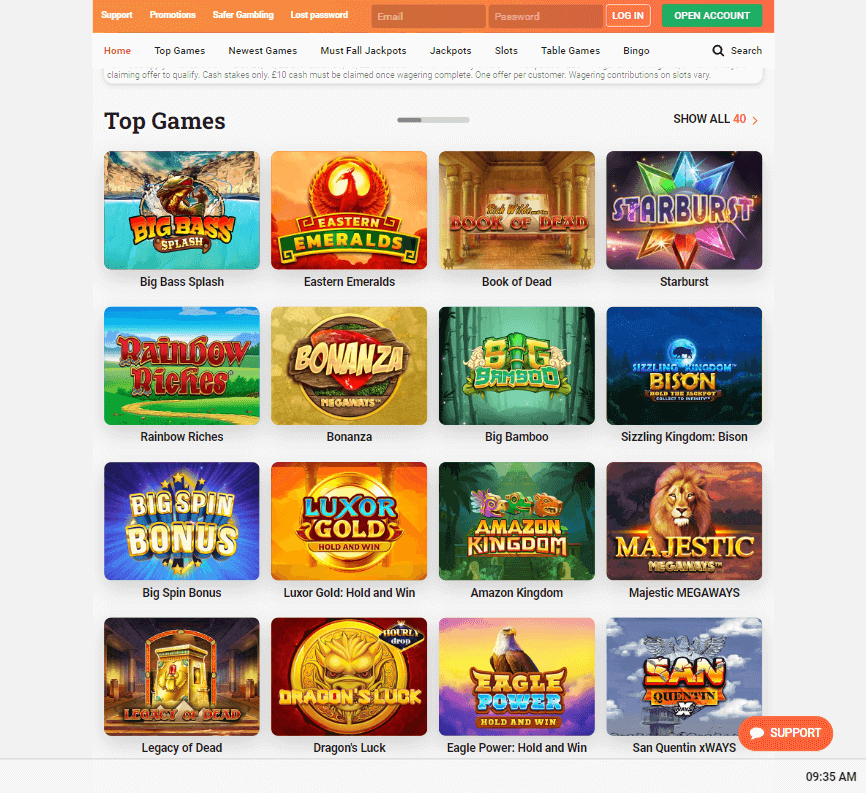
For UK players looking for adventure in the pyramids of ancient Egypt, the Book Of Dead Bonus Code slot game delivers thrilling gameplay, but the foundation of that fair play is a complex and rigorously tested technology: Random Number Generation. This essential system, often abbreviated as RNG, is the digital heartbeat of every spin, assuring that each outcome is entirely independent, unpredictable, and free from manipulation. The reliability of this process is not merely a claim by the developer, Play’n GO, but a verified fact, subject to stringent audits by independent testing laboratories approved by the UK Gambling Commission. Understanding how this RNG works provides players with the assurance that their journey alongside Rich Wilde is governed by genuine chance, where every scatter symbol, expanding wild, and free spin round is the product of a validated and transparent random event, preserving the highest standards of fairness mandated for the British market.
The Role of RNG in Current Online Slots
At its core, a Random Number Generator is a sophisticated algorithm built to produce a constant, unending sequence of numbers that have no any recognizable pattern. In the context of the Book of Dead slot, this stream of numbers is created at a remarkable speed, even when the game is not being played. The moment a player clicks the spin button, the RNG selects a certain number from this sequence, which is then transformed by the game’s software into a matching set of symbols on the reels. This process occurs in milliseconds, separating the outcome completely from any prior or future spins. This technology fundamentally supplants the physical mechanisms of traditional fruit machines, guaranteeing digital integrity. For UK players, this indicates the game’s volatility, its hit frequency, and the potential for achieving the coveted Book of Dead bonus round are all faithfully established by this random digital process, creating a just and unpredictable gaming environment that reflects the randomness of a physical deck of cards or a dice roll.
From Code to Ancient Symbols
The transition from a basic digit to the legendary Ankhs, Scarabs, and the Book of Dead symbol itself is a fascinating translation determined by accurate mathematical mapping. Each possible position on the game’s five reels is given a wide range of values from the RNG’s output. The algorithm picks values that align to specific stops on each virtual reel strip, which is a pre-defined set of symbols with set frequencies. The configuration of these reel strips is what establishes the game’s theoretical Return to Player (RTP). Therefore, the RNG does not directly ‘choose’ a symbol; it chooses a stop number, and the game’s logic then displays the symbol located at that position on the pre-constructed reel. This complex process assures that the published RTP of approximately 96.21% for Book of Dead is mathematically attained over an prolonged period through pure randomness, not through pre-set wins or losses for any single player.
Securing Independence of Every Spin
A key aspect often misinterpreted by players is the concept of independence. A certified RNG assures that each spin event is completely isolated. The algorithm has no memory of past results, nor can it influence future ones. Whether a player has just triggered ten free spins or has experienced a hundred spins without a substantial win, the probability https://pitchbook.com/profiles/company/271081-63 for the very next spin remains constant. The RNG does not function on cycles or schedules to produce wins; it simply generates the next number in its immense, unpredictable sequence. This absolute independence is the foundation of fair play, ensuring that strategies based on past outcomes are irrelevant and that every click gives the same fresh, random chance as the first spin of the session.
Validation and UK Compliance Compliance
In the United Kingdom, the functioning of any online slot, including Book of Dead, is dependent upon rigorous third-party verification of its RNG and overall software. This is not a discretionary measure but a legal mandate enforced by the UK Gambling Commission (UKGC), one of the strictest regulatory bodies globally. Before a game can be presented to UK players, it must undergo thorough testing by an independent testing laboratory. These labs, such as eCOGRA, iTech Labs, or GLI, dissect the game’s source code, run simulations involving billions of spins, and statistically analyse the output to confirm the integrity and integrity of the RNG. They confirm that the theoretical RTP matches the practical outcomes and that no hidden functions could influence results. A game that passes gains a certificate of compliance, which is a compulsory prerequisite for the UKGC licence held by the casino offering the title.
The UKGC’s Position on Fairness and RNG
The UK Gambling Commission’s licensing conditions clearly mandate that all games of chance must run fairly, with clear rules and random outcomes. Their technical standards require that RNGs used by licensees are robust, unpredictable, and non-repeatable. Furthermore, the UKGC emphasizes that these RNGs are tested at regular frequencies, not just once before launch. This means that the version of Book of Dead available to UK players today is subject to ongoing audits to ensure continued compliance. Any casino presenting this slot to a British audience must be able to provide evidence of this certification upon request. This regulatory framework provides a powerful layer of consumer protection, ensuring that the game’s advertised features, such as the chance of the Book symbol expanding to cover an entire reel, are provided through verified random processes, not arbitrary decisions.
Understanding RTP and Variance in Book of Dead
While the RNG ensures randomness, the game’s mathematical design governs the long-term statistical outcome. Book of Dead has a published Return to Player (RTP) of around 96.21%, which indicates the theoretical percentage of all wagered money the slot will pay back to players over an extended duration, often millions of spins. This figure is intrinsically linked to the RNG’s distribution of outcomes across the game’s reel strips. Crucially, the RNG does not ‘target’ this percentage for an individual session; volatility, or volatility, plays a huge factor. Book of Dead is famous for its high volatility. This means wins may be less common but have the potential to be greater when they occur, such as during the free spins feature. The RNG supports this model by generating the sequences that lead to both the dry spells and the substantial returns, all within the mathematical limits of the game’s design, which has been validated as fair and accurate by independent testers.
Debunking Common RNG Fallacies
Several persistent myths surround RNGs in slots, and addressing them is key to informed participation. One prevalent idea is that a game is ‘due’ for a win after a losing run, which is a fallacy known as the gambler’s error; the RNG’s independence makes this impossible. Another misconception is that the timing of a spin influences the result, but the RNG’s number generation is constant and ultra-fast, making human timing meaningless. Some players also suspect that bonus features or free spin rounds are triggered on a secret clock, but in actuality, each trigger is a random event determined by the same RNG that governs base game spins. The expanding Book icon, a central feature, activates entirely based on the random alignment of symbols, not on the amount wagered or the time spent playing. Recognizing that these features are integrated into the random mathematical model dispels notions of artificial interference.
How Players Can Confirm Game Fairness On Their Own
Proactive UK players are not required to simply accept the word of casinos or developers; they have tangible ways to seek assurance about RNG fairness. The most direct action is to check the casino website for licensing and certification information. A authorized UK-facing casino will visibly display its UKGC licence number and often supply links to the test reports from auditing labs like eCOGRA, which may feature Book of Dead specifically. Furthermore, players can review the game’s ‘help’ or ‘information’ screen within the slot itself, where the theoretical RTP is as required required to be stated. While the full RNG certification report is a technical document, its public availability is a strong indicator of compliance. Players should be wary of any platform that cannot easily offer proof of licensing and independent testing, as this is a essential requirement for legal operation in the UK market and a key safeguard for the player.
The Importance of Playing at UK-Licensed Casinos
Choosing to play Book of Dead at a casino licensed by the UK Gambling Commission is the single most effective step a player can take to guarantee the integrity of the RNG. The UKGC’s regulatory framework compels licensees to use only sanctioned, tested software from reputable providers like Play’n GO. These casinos are liable to ongoing audits and must maintain segregation of player funds, offer clear terms, and provide access to responsible gambling tools. An offshore or non-UKGC licensed site may provide the same slot, but the assurures of RNG verification, fair dispute resolution, and legal protection are greatly diminished. The UKGC seal confirms that the version of Book of Dead being played has undergone the particular, rigorous testing required for British players, making the licensed casino the reliable gateway to a genuinely fair gaming experience.
RNG Influence on Bonus Features and Free Spin Rounds
The exhilarating bonus features in Book of Dead are the area where the RNG’s role turns especially thrilling. The move to the free spins round is triggered when three or more Book scatter symbols show up unpredictably on the reels, an event governed by the RNG’s selection of reel stops. Once inside the bonus round, the RNG continues to operate with equal reliability. The choice of the special expanding symbol, which is randomly chosen before the free spins commence, represents another result determined by the algorithm. Each free spin result is then created on its own, with the possibility for the chosen symbol to expand and create major victories. The full chain, from trigger to conclusion, is a cascade of random events, securing the bonus round preserves a consistent measure of unpredictability and fairness as the base game, a process thoroughly examined during certification audits.
Preparing for the Future: RNG and Progressive Slot Mechanics
As slot technology evolves with features like cascading reels, megaways mechanics, and complex bonus buys, the basic necessity for certified RNG stays constant. The algorithms may need to handle more advanced math to determine symbol placement or feature triggers, but the central idea of generating unpredictable, independent outcomes persists. For a game like Book of Dead, which stands as a mainstay in the UK market, its RNG certification isn’t a singular occurrence. Any substantial change or re-release would necessitate re-testing. This commitment to regular confirmation ensures that as games evolve, player protection and fair play evolve with them, maintaining the reliable atmosphere that allows players to enjoy the immersive experience of the slot with absolute certainty in its underlying mechanics.
FAQ
What is an RNG and why is it important for Book of Dead?
An RNG (Random Number Generator) is a verified algorithm that produces entirely unpredictable number sequences. In Book of Dead, it determines every spin’s outcome, making sure each result is unrelated and impartial. Its validation by independent labs, as required by UK law, assures that the game’s features, like the free spins round, are activated purely by chance, not manipulation, upholding the slot’s honesty for all UK players.
How can I verify the Book of Dead slot is fair in the UK?
You can be confident by choosing UKGC-licensed casinos, which are legally required to feature games with third-party verified RNGs. Check the casino footer for the UKGC licence number and references to tester accreditations (e.g., eCOGRA). The game’s own information screen must also present its calculated RTP (approx. 96.21%). These combined measures offer solid proof of compliance with the UK’s strict fairness regulations.
Does the RNG make the game more likely to pay after a losing streak?
No, it does not. This is a widespread misunderstanding known as the gambler’s fallacy. A approved RNG ensures every spin is entirely separate of previous results. The likelihood of winning on any given spin remains fixed, regardless of past outcomes. The algorithm has no memory and cannot alter results to ‘balance’ streaks, making tactics based on past spins useless.
Is it possible for the casino or software provider interfere with the RNG?
In the supervised UK market, manipulation of a verified RNG is essentially unfeasible and would be illegal. The game’s software, including its RNG, is locked and examined by independent auditors before launch and at regular intervals. Any tampering would be detected in following audits, prompting serious consequences from the UK Gambling Commission, notably licence revocation for the casino.
Is the choosing of the expanding symbol in free spins really random?
Yes, the choice of the particular expanding symbol during the Book of Dead free spins feature is a entirely random event governed by the same certified RNG. Before the free spins commence, the algorithm randomly selects one regular symbol to become the expander. This process is fundamental to the game’s mathematical model and is checked during fairness testing to confirm no prejudice or pattern.